Showing posts with label companion planting. Show all posts

Monday, 17 September 2012

Kiwi in Zone 8!

Kiwi's in the UK? Well, here's hoping for some vigorous growth and fruiting, at the very least, some wonderful learning and experimentation. I planted this new Kiwi plant (Actinidia deliciosa) out in July into a large, deep container of store bought compost, the plant grew really well and twirled its way up and beyond the stakes I'd placed for it. Being a hardy climber, it was clear I hadnt estimated the pot size and supporting structure correctly!

In this last few months she(?), he(?) quickly outgrew the first support structure, so it was time to move to a larger and more appropriate container with a sturdy, more permanent support. I built a planter and a trellis specifically for the job, and transplanted in mid September.

By next morning the neighbour cats had been in the planter scratching and snapped one of the vines clean off! Being ever resourceful, I cut that whole vine off and snipped it into shorter 6 inch pieces and put a couple directly into the raised bed,  another under a plastic container into a different planter, and yet another I let stand in a jar of water in the house.

First experiment so soon! I'll see if I get any success rooting any of these pieces, and if they do, which method works best.

Normally a male and a female plant are required to set fruit, I dont know yet which variety I have until its starts to flower. The ratio for producing a good crop is generally 1 male to four female, but my 'small holding' will only be supporting one of each. Once I discover which mine is, I'll get one of the opposite sex!

Kiwi is best grown in full sun and well drained soil, so far it seems pretty happy against the house, growing in a pot. I also planted a couple of strawberry plants in the planter as an under storey, and will see how these two get along.

This is the trellis I built, waiting to get fixed to the wall. I re-used old roofers slats taken down from a structure in the garden, painted it up to match the planter, and now need to affix it in place. Photos and instructions coming soon!


Online resources + information

Here's a great article on Kiwi growing and pruning.
Gorgeous Chocolate Kiwi popsicle recipe.

Friday, 11 May 2012

Companion Planting - Building a Guild

Research continues in to beneficial plant relationships, guilds and companion planting possibilities.

Here are some more planting partners... this is an ongoing list, if you know of any other good guilds or companions please leave them in the comments below and I'll add here.

There are a couple of very useful companion planting guides online, one is Our Herb Garden, quite thorough information on both growing and companion planting, another fabulous resource is Golden Harvest Organics. Also the wiki on companion planting is a helpful guide and offers many beneficial combinations.

Some very useful books that I have found most helpful while compiling this list include:
Carrots Love Tomatoes: Secrets of Companion Planting for Successful Gardening
Companion Planting
The A-Z of Companion Planting


Ongoing List of Happy Plant Companions

Strawberries + Chives + Borage
Strawberries (ground cover, fruit + leaves for tea)
Chives (herb crop, mulch, aromatic insectary deterrent, edible flowers to attract pollinators)
Borage (edible greens, edible flower pods/flowers to attract pollinators)

Potatoes + Flax + Marigold + Carrots
Potatoes (edible vegetable, repels Mexican bean beetle, heavy soil cleaners)
Flax ()
Marigold (attract insects away from potatoes, asparagus, cabbage, tomatoes, curcubits all benefit as repels squash vine borer and cucumber beetle) NOT good with beans and cabbage.
Carrots ()

Goji Berries + 
Goji Berries (edible superfruit) (Lycium barbarum) Solanaceae (nightshade) family includes tomatom potato, eggplant, chili peppers, capsicum, tobacco, petunias. Diciduous shrub 3m tall long tendrils.

Onion + Carrots
Onion (edible vegetable, repels carrot fly)
Carrot ()

Parsley + Asparagus
Parsley (edible herb, 'tea' for repelling asparagus beetles, parsley gone to seed attracts beneficial parasitic wasps)
Asparagus (edible vegetable)

Horseradish + Potatoes, Cabbage, Mint, Parsley, Lavender
Horseradish (medicinal, edible root + young leaves, deters insects, rampant, good mulch, perennial, mustard family, needs potassium for healthy growth, ph 6.0 to 7.0, deep loam soil, repels potato bugs)

Cabbage + Rhubarb Leaves
Cabbage ()
Rhubarb Leaves (plant rhubarb leaves in hole before planting cabbage to deter cabbage maggot)

Beans + Corn
Beans (edible legume, nitrogen fixing)
Corn (edible vegetable, shade + 'pole' for bean to climb, heavy feeders)

Tomato + Basil + Comfrey
Tomato ()
Basil (edible herb, enhances flavour of tomato when planted close)
Comfrey (medicinal herb, mulch, liquid fertilizer, nitrogen fixing, high potassium, high phosphorous, shade tolerant, attracts bumblebees)

Potatoes + Pole/Bush Beans + Comfrey
Potatoes (edible vegetable, repels Mexican bean beetle, heavy soil cleaners)
Pole/Bush Beans (edible legume, repels Colorado potato beetle, nitrogen fixing)
Comfrey (medicinal herb, mulch, liquid fertilizer, nitrogen fixing, high potassium, high phosphorous, shade tolerant, attracts bumblebees)

Pepper plants + Comfrey
Pepper plants ()
Comfrey (medicinal herb, mulch, liquid fertilizer, nitrogen fixing, high potassium, high phosphorous, shade tolerant, attracts bumblebees)

Blueberries + Juniper + Bearberry + Wild Lupine + False Indigo*
Blueberries (edible fruit)
Bearberry kinnikinnick (edible berries, medicinal properties)
Juniper (pine needle acidic mulch)
Wild Lupine (nitrogen fixing)
False Indigo (alt) (nitrogen fixing)
* all do well in acidic soil

Apricot Tree + Comfrey
Apricot Tree (edible fruit, flowers attract pollinators, shade)
Comfrey (medicinal herb, mulch, liquid fertilizer, nitrogen fixing, high potassium, high phosphorous, shade tolerant, attracts bumblebees)

Cabbage + Hemp (ref: book Carrots Love Tomatoes )
Cabbage ()
Hemp (Protects cabbage from White Cabbage Butterfly)

Zucchini + Corn + Beans + Nasturtiums
Zucchini (edible, prolific, heavy feeder, edible flowers)
Corn (shade for zucchini, tall growing small footprint, same soil/water growing conditions as zucchini)
Beans (edible legume, tall growing provide shade and can interplant, nitrogen fixing so feed soil for zucchini)
Nasturtiums (edible flowers and leaves, trap crop to attract pests away from main crop)

Chives + Parsley + Kohlrabi
Chives (edible herb, repels pests)
Parsley (edible herb)
Kohlrabi (edible vegetable)


Monday, 30 April 2012

Strawberries and white grubs

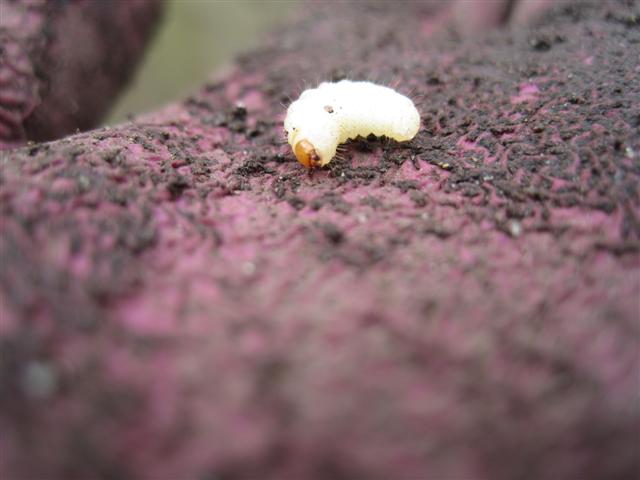
As the sun eventually peeked out for a couple of hours, I went out in the garden to start potting up a hanging basket - thinking I might try some strawberries with some trailing geraniums. When I dug up a couple of last years strawberry plants I noticed a collection of white grubs in the container among my plants. A little snoop around the internet brings up information on the Scarab Beetles, which include the June beetle, European chafer and Japanese beetle. As mine are 'active' now (late April. early May) I'm going to assume that they are the June beetle variety. Anyhow, I've whacked the root core of each strawberry plant, half a dozen grubs have fallen out onto the floor. Turning the whole container upside down I have tipped out all the dirt and picked out the little white grubs, laid them out on a platter, and now I've stepped back inside for a cup of tea to let the healthy bird population around here come in and feast!

On closer look, and more snooping around the internet, it looks like these might be strawberry root weavil (Brachyrhinus ovatus).

The closer image (below) is from a wonderful blog I discovered called garden therapy, while looking for information on the strawberry weavil. She had the same problem as mine - you can see her photo below - but overcame it and now has some mighty fine strawberries. I hope mine do half as well!!
Original Image: © www.gardentherapy.ca

What I also discovered while hopping around the internet, is that geraniums are toxic to white grubs!! Who knew!? So moving the strawberries to the hanging basket to see how they live together was a good move on both parts!

I'm building a list of beneficial companion planting and plan to create an app that will help gardeners with choosing beneficial plants for their own garden. If you have any experience of beneficial planting schemes of your own, please leave a comment over in the companion planting post so that I can include as many tried and tested beneficial companions as possible!

Now lets see how the strawberry and geranium get along this summer.